Abstract
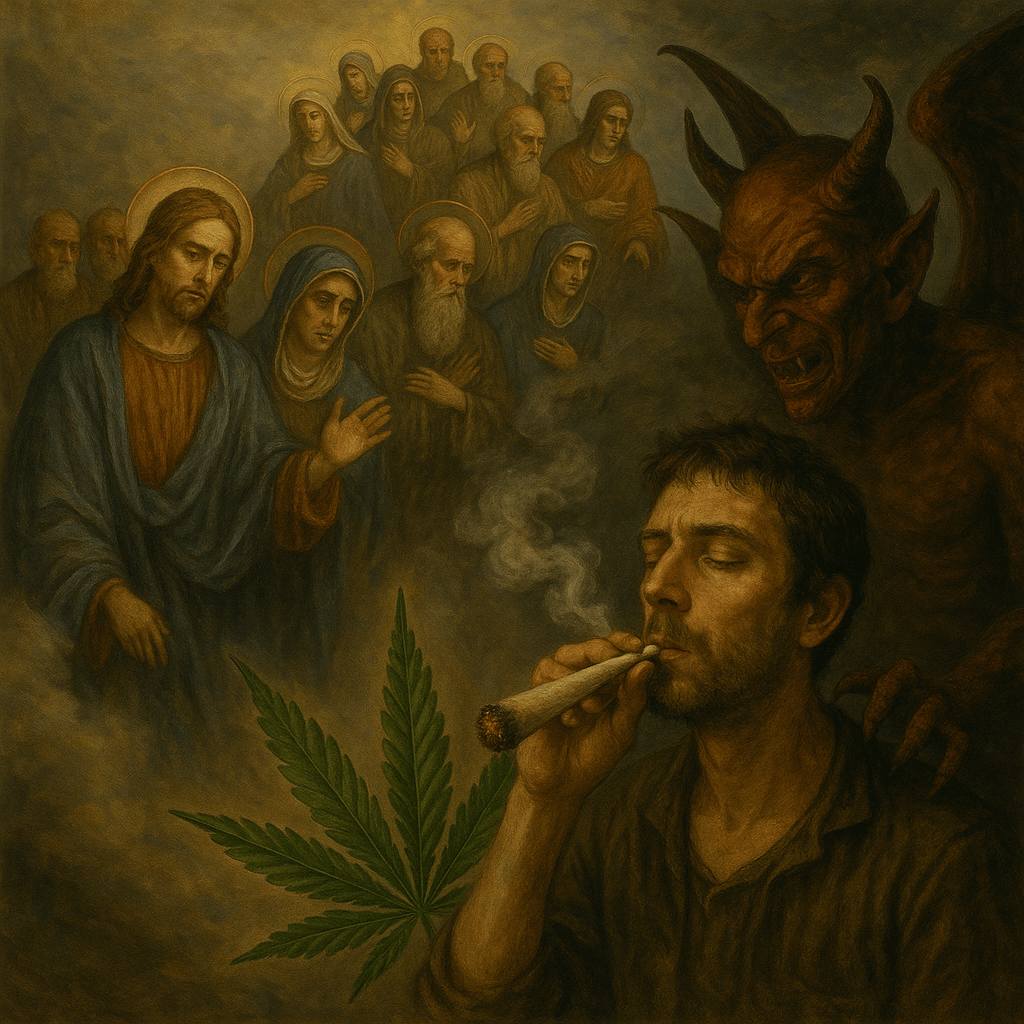
This article provides a scholarly examination of the negative implications of marijuana use (“the defects of marijuana”) from a Christian worldview. Grounded in the teachings and example of Jesus Christ as revealed in Scripture, it explores how recreational marijuana use conflicts with core Christian virtues such as sobriety, self-control, holiness, and reverence for the body as the temple of the Holy Spirit. The spiritual and moral dimensions are analyzed through a biblical lens, drawing on relevant passages and theological reasoning. Additionally, the article discusses political and societal considerations consistent with Christian ethics – including the role of government in upholding moral order, protecting public health, and resisting societal decay. It examines how marijuana legalization intersects with Christian civic concerns, arguing that normalization of the drug poses challenges to communal well-being and moral values. Supported by Scripture citations and insights from Christian theological thought, the article presents a comprehensive argument that marijuana use, especially for intoxication, is incompatible with a Christ-centered life and that Christians have valid reasons to caution against its legalization on ethical grounds.
Introduction
In recent years, marijuana has moved from the fringes to the mainstream of society. Its use is on the rise as many jurisdictions legalize or decriminalize the drug, and public perception has shifted toward acceptance. Cannabis is now the most widely used mind-altering substance after alcohol. Even within some Christian communities, opinions are divided – with a growing number asking whether recreational marijuana is morally permissible or compatible with their faith. This cultural moment raises an urgent question: how should Christians evaluate marijuana use in light of the teachings of Jesus Christ and biblical principles?
Though the Bible does not explicitly mention marijuana, it provides clear guidance on the stewardship of our bodies and minds and on the pursuit of virtue. Jesus and the New Testament writers teach values of sobriety, alertness, holiness, and self-control that directly inform this issue. For example, Jesus warned His disciples: “Watch yourselves lest your hearts be weighed down with dissipation and drunkenness and cares of this life” (Luke 21:34), cautioning against intoxication and excess that dull one’s spiritual vigilance. The Christian tradition has long regarded intoxication as a moral danger, and the principle can be extended to any substance that impairs one’s faculties. Thus, a Christ-centered worldview calls into question the wisdom and propriety of using marijuana for a mind-altering “high.”
This article will analyze marijuana use from a Christian perspective in two major aspects. First, it will explore the spiritual implications – how using marijuana for intoxication conflicts with biblical virtues exemplified in Jesus’ life and teaching, such as sobriety of mind, self-control, personal holiness, and honoring the body as God’s temple. This section will draw on Scripture and theological insights to show that the recreational use of marijuana runs contrary to the character and lifestyle to which Christians are called. Second, the article will examine the civic and political implications in light of Christian ethics – considering the responsibility of government to promote moral order and public health, and how the legalization of marijuana might challenge or undermine Christian concerns for societal well-being. In doing so, we will integrate relevant biblical principles (e.g. the God-ordained role of authorities) and observations from Christian ethical thought regarding law and morality.
Through a comprehensive biblical and moral analysis, grounded in the teachings of Jesus and the broader counsel of Scripture, we aim to demonstrate that marijuana use entails significant “defects” or downsides from a Christian standpoint. These include spiritual dangers for the individual and potential harm to the community. Ultimately, the goal is to offer a well-reasoned Christian evaluation – one that encourages believers to pursue holiness and wisdom in personal conduct, and to thoughtfully engage in public discourse about drug use and legalization with a perspective shaped by their faith.
Spiritual Implications: Marijuana’s Conflict with Christian Virtues
Sobriety and Alertness
Christian Scripture places great emphasis on sobriety of mind and spiritual alertness. Believers are exhorted to remain clear-headed and watchful, in contrast to the dulled state caused by intoxication. The Apostle Peter writes, “Be alert and of sober mind. Your enemy the devil prowls around like a roaring lion looking for someone to devour” (1 Peter 5:8). Similarly, Paul urges, “Let us be awake and sober” (1 Thessalonians 5:6), associating spiritual vigilance with an unintoxicated state. Jesus Himself warned against having hearts “weighed down with dissipation and drunkenness,” lest we be unprepared for critical moments (Luke 21:34). The clear biblical trajectory is that a Christian is called to an alert, sober-minded life, attuned to God’s will.
Marijuana use for recreation directly compromises this virtue of sobriety. The drug’s purpose in recreational contexts is to produce a high – an altered state of consciousness characterized by euphoria and mental impairment. John Piper observes that unlike modest caffeine use, which keeps one alert, marijuana “temporarily impairs the reliable processing of surrounding reality,” diminishing one’s memory, perception, and reasoning. In essence, a marijuana high is a form of intoxication, biblically comparable to drunkenness. It “leads away from the kind of sober-mindedness and self-control that is essential in using the mind for the glory of God”. Whereas Scripture commands believers not to be drunk with wine but to be filled with the Spirit (Ephesians 5:18), by analogy the intoxication from cannabis likewise falls outside the lifestyle of Spirit-filled sobriety. Even proponents of legalization acknowledge that marijuana impairs short-term memory and learning while the user is intoxicated. These effects, though temporary, run against the biblical ideal of a mind ready to serve God.
Furthermore, achieving the desired psychoactive effect of marijuana often necessitates reaching a point of impairment. Unlike alcohol – which can be consumed in small quantities without intoxication – marijuana’s potency is such that even a few inhalations can induce noticeable intoxication. One pastor notes that “it takes only four puffs of a marijuana cigarette to induce a state of intoxication,” raising the question: if one’s intent isn’t to get high, why use marijuana at all? The typical use of cannabis is precisely to experience its mind-altering effect, meaning recreational use virtually always involves surrendering sobriety. From a Christian view, this is problematic. The Bible’s overall message is that God does not want us to be “led astray by mind-altering substances”. Instead, believers are to remain sober so that they do not fall into sin. As one Christian commentary explains, “The Bible wants us to be sober because being intoxicated makes us more likely to sin.” Decades of research confirm that alcohol and other drugs lower self-control and lead to increased risk of harmful behaviors. Intoxication opens the door to temptations and lapses in judgment that a sober person could resist. In short, marijuana use conflicts with the virtue of sobriety by intentionally inducing an un-sober state. This undermines the spiritual alertness that Christ and the apostles insist upon, and thus can hinder one’s relationship with God. Christians committed to following Jesus’s call to “stay awake” spiritually (Mark 13:35–37) have strong cause to avoid any practice that clouds the mind and dulls the spirit.
Self-Control and Mastery
Closely tied to sobriety is the Christian virtue of self-control. The New Testament teaches that self-control is a fruit of the Holy Spirit (Galatians 5:22–23) and a mark of a believer living under Christ’s lordship. Paul wrote to Timothy that “God gave us a spirit not of fear but of power and love and self-control” (2 Timothy 1:7, ESV), highlighting disciplined self-mastery as part of a godly life. From a biblical standpoint, exercising self-control means not being dominated by fleshly appetites or addictions. Paul counsels, “I will not be mastered by anything” (1 Corinthians 6:12). Yet the use of an addictive, mind-altering drug threatens precisely to master an individual’s will and habits, contradicting the call to self-governance.
Marijuana is often promoted as harmless, but it carries a risk of dependency and abuse that can erode self-control. Many users testify that cannabis, while not as chemically addictive as some hard drugs, can become a habitual crutch – something one relies on to relax, cope, or escape reality. Modern research has shown that regular marijuana use can lead to psychological dependence. The drug’s active component (THC) mimics neurotransmitters associated with pleasure, and heavy use can cause the brain to reduce its natural production of these chemicals. When the drug’s effect wears off, the user may experience irritability, anxiety, and cravings. In this way, marijuana can enslave its users in a cycle of needing the next high to feel normal. Pope Francis has warned that drugs are “a new form of slavery” in our time, and indeed millions find themselves trapped in addiction or habitual use of substances. To the extent that marijuana use fosters a dependence or habit, it conflicts with the Christian ideal of self-control and freedom in Christ.
Even in less extreme cases, using marijuana recreationally typically involves surrendering one’s full faculties for the sake of pleasure. It is a choice to indulge the flesh (the desire for a euphoric or relaxed sensation) at the cost of temporary impairment of reason and will. Christian ethicists argue that “anything that diminishes man’s use of reason and will assails his dignity as a human person and is therefore harmful”. Our capacity for rational thought and volition is a God-given gift, part of bearing His image. Intentionally dulling those capacities for a thrill or escape is an “unjustified and irrational renunciation of thinking, willing and acting as free persons,” as St. John Paul II wrote. In other words, to willfully impair one’s own discernment and self-mastery (when not medically necessary) is to undermine the imago Dei (image of God) within us, which includes our rational mind and conscience. The Catechism of the Catholic Church accordingly labels the use of drugs (apart from strict medical necessity) a “grave offense”, noting that drug abuse “inflicts very grave damage on human health and life” and constitutes a surrender of moral self-control. It is telling that this teaching is categorized under the commandment “You shall not kill” – indicating that abusing drugs is viewed as a form of self-harm contrary to God’s will for our lives.
Biblically, Christians are urged to “abstain from fleshly lusts which wage war against the soul” (1 Peter 2:11). The impulsive desire to get high can be seen as one such fleshly inclination that wages war against the higher interests of the soul. Yielding regularly to that impulse can weaken one’s ability to say “no” to other temptations as well. By contrast, exercising self-control in God’s strength trains a believer to resist sin and grow in virtue. Indeed, Scripture teaches that we should be “infants in evil” – inexperienced in sinful indulgences – but “in your thinking be mature” (1 Corinthians 14:20). Rather than deliberately seeking an experience of mental impairment (a “high”), Christians are called to be “ruthlessly clear-headed”, even if the crowd is rushing toward self-indulgence. This maturity of mind enables us to discern God’s will and avoid being mastered by destructive habits.
In summary, recreational marijuana use can undermine self-control by fostering dependency and by the very act of surrendering one’s mind to a substance. It stands at odds with the Spirit-empowered discipline to which believers are called. Whereas the Christian seeks to be “controlled” by the Holy Spirit (Ephesians 5:18) rather than by substances, marijuana invites an outside control over one’s senses and choices. It is a subtle invitation to let something other than God’s Spirit influence or even dominate us – a prospect the Bible warns against in principle. From a Christian perspective, true freedom is found not in indulging every desire, but in living within the boundaries of God’s design, free from enslavement to sin or chemicals. “You are not your own,” Paul reminds, pointing to God’s ownership of our lives (1 Corinthians 6:19). Thus, the exercise of self-control in avoiding mind-altering drugs is part of honoring the Lord who bought us with a price.
Holiness and the Temple of the Holy Spirit
Christians are called to a life of holiness – to be set apart in purity for God. The Apostle Peter echoes the Old Testament command: “As He who called you is holy, so be holy in all you do” (1 Peter 1:15-16). This holiness encompasses both body and spirit: “May your whole spirit, soul, and body be kept blameless” (1 Thessalonians 5:23). One crucial aspect of holiness in Christian teaching is treating the human body with reverence, since it is the dwelling place of God’s Spirit. Paul expounds this in no uncertain terms: “Do you not know that your body is a temple of the Holy Spirit within you, whom you have from God? You are not your own, for you were bought with a price. So glorify God in your body.” (1 Corinthians 6:19–20). Here the believer’s body is likened to a sacred temple – a holy sanctuary that belongs to God. The implication is that whatever we do in our bodies should honor the One who dwells within. We are stewards, not owners, of our bodies, and we must not defile them or use them in ways contrary to God’s purpose.
The recreational use of marijuana raises serious questions in light of this teaching. If the body is God’s temple, introducing a harmful, mind-clouding substance into that temple can be seen as an act of desecration or disrespect. Even secular health experts acknowledge that marijuana use has detrimental effects on the body and brain, especially with habitual use. THC (the active compound in cannabis) “clogs receptors” in the brain, resulting in memory loss, slowed reaction time, loss of motivation, and impaired coordination – essentially leaving the brain “temporarily incapacitated.” Over the long term, heavy marijuana use has been linked to persistent cognitive deficits; for instance, one longitudinal study found that individuals who started using heavily in their teens lost a significant amount of IQ points by midlife. Marijuana smoke also poses risks to lung health, similar to tobacco smoke. In short, using this drug can harm the body, sometimes in subtle but real ways. The Bible clearly teaches against “harming the body” – “If anyone destroys God’s temple, God will destroy that person; for God’s temple is sacred, and you together are that temple” (1 Corinthians 3:17). While this verse in context refers to the church collectively, the principle of not willfully damaging what is God’s is applicable to our physical bodies as well. Intentionally impairing one’s health or mental clarity for escapist pleasure fails to “honor God with your bodies” as Scripture commands.
Holiness also means cleansing ourselves from defilement (2 Corinthians 7:1). Throughout the Bible, holiness entails abstaining from substances or practices that pollute us. In the Old Testament, priests were forbidden to serve in the temple while under the influence of wine or strong drink, so that they could distinguish between the holy and the common (Leviticus 10:9–10). This underscores that intoxication is incompatible with the dignity of serving God. In the New Covenant, all believers are in a sense priests to God (1 Peter 2:9), and our lives are to be spiritual sacrifices. How then can we reconcile drug-induced intoxication with the notion of a holy, “living sacrifice” life offered to God (Romans 12:1)? As one Christian counselor put it, “God doesn’t want us to cloud or confuse our minds in any way, whether with drugs, alcohol, or anything else”. When we do so, “we endanger ourselves morally, spiritually and even physically – and that is never God’s will”. The believer’s aim is to stay pure and uncorrupted by substances that would compromise their ability to commune with God. Indeed, “if we’re unable to think clearly, we’re unable to grow closer to God”, as one analysis notes. Christian holiness involves pursuing a clear-minded intimacy with God, unhindered by chemical fog.
Moreover, the example of Jesus Christ calls us to holiness and self-denial rather than fleshly indulgence. Jesus lived a life dedicated to doing the Father’s will, fully alert to God’s purposes at all times. He obviously never abused substances; rather, He spent His time teaching, serving, and praying with a clear mind and heart. Christ taught, “Blessed are the pure in heart, for they shall see God” (Matthew 5:8). Purity of heart and mind is something believers are to strive for, by God’s grace. Introducing a substance that alters consciousness for recreational purposes can be seen as working against that pursuit of purity. It can stir up impure thoughts or diminish one’s sensitivity to the Holy Spirit’s voice. By contrast, Jesus prayed that His followers would be sanctified in the truth (John 17:17) – set apart wholly for God. Anything that draws us away from that single-minded devotion, including a drug habit, is a snare to Christian holiness.
Finally, we should consider the impact of marijuana use on one’s Christian witness to others. Holiness is not only personal but missional; believers are called to be “the light of the world” (Matthew 5:14) and to live in a way that glorifies God before others. Recreational marijuana use, with its attendant behaviors and culture, can tarnish a Christian’s testimony. It may communicate indulgence rather than discipline, escapism rather than hope, conformity to the world rather than transformation by Christ. As one minister asks, “What sort of witness for Jesus do we give when we join with the world in the recreational use of a drug whose purpose is to induce a state of passivity and stupor?”. The implied answer is: not a very good one. A believer who partakes in using weed could become a stumbling block to others – perhaps emboldening a weaker brother or sister to fall into addiction, or undercutting the credibility of their moral counsel. The Billy Graham Evangelistic Association addressed this issue, noting that by continuing to smoke pot, a Christian “compromises [their] witness with others (including some who may be struggling with addiction, or may be tempted to begin using drugs)”. Love of neighbor would caution us against engaging in behavior that might lead others astray or confuse them about the Gospel’s power to transform lives. In 1 Corinthians 8 and 10, Paul discusses foregoing even permissible things if they cause others to stumble; how much more should Christians avoid something that is arguably not permissible and carries inherent moral and physical risks?
In sum, the pursuit of holiness – being a fit vessel for God’s presence and a light to the world – is incompatible with the voluntary use of marijuana for intoxication. The sanctity of the body as the Spirit’s temple, the call to purity of mind, and the mandate to live above reproach before others all point to abstinence from drug use. As Paul concludes in that Corinthians passage: “You are not your own… Therefore honor God with your bodies.” Honoring God means refusing to pollute the body or mind that He has redeemed and made His dwelling. It means choosing to be filled with the Holy Spirit, not with a hallucinogenic smoke (Ephesians 5:18). Any pleasure or relief one thinks they gain from marijuana is fleeting and comes at the cost of dulling one’s spiritual sensitivity. By contrast, the joy and peace offered by Christ are lasting and require no chemical assist. The Christian can affirm: “In everything I do – eating, drinking, or whatever – I do all to the glory of God” (cf. 1 Corinthians 10:31). Recreational marijuana, which cannot be easily used to God’s glory, finds no comfortable place in such a life devoted to Christ.
Civic and Political Implications: A Christian Ethical Perspective
Government’s Role in Moral Order and Justice
Christian scripture not only guides personal morality but also speaks to the role of governing authorities in society. The Bible teaches that government is instituted by God to uphold justice, reward good, and restrain evil (Romans 13:1–4). Rulers are called “God’s servant for your good,” given the charge to punish wrongdoing and promote a well-ordered, virtuous society. Likewise, 1 Peter 2:13–14 says that governors are sent “to punish those who do wrong and to commend those who do right.” From this perspective, civil authorities have a duty under God to create conditions that encourage moral behavior and protect people from harm. Laws are a tool by which public morality is, to an extent, shaped and enforced.
When it comes to substances like marijuana, a Christian worldview would ask: does legalizing this drug advance the common good and virtue, or does it contribute to moral and physical harm? Many believers conclude that legalization (especially for recreational use) is unwise and contradicts the government’s responsibility to uphold moral order and public welfare. If a behavior is harmful to individuals and corrosive to societal health, there is a sound moral rationale for it to be discouraged or prohibited by law. Historically, this is why many drug laws and alcohol regulations exist – to curb vice and its ripple effects. Even though marijuana use is often seen as a matter of personal freedom, Christians argue that authorities must consider more than individual autonomy; they must consider the collective impact on society’s moral fabric and the message that legal sanction sends about right and wrong.
Notably, until very recently marijuana was illegal throughout the United States (and it remains federally illegal at the time of writing). Christians were generally obligated to abstain simply out of obedience to the law of the land, in line with the biblical injunction to “be subject to the governing authorities” (Romans 13:1) and “submit…to every human institution” for the Lord’s sake (1 Peter 2:13). The New Testament ethic of submission to government is strong – unless the state commands something that directly contradicts God’s law (Acts 5:29), believers are to obey civil laws as a matter of witness and conscience. Thus, where marijuana is illegal, Christians have a clear directive to refrain. As one theologian noted, aside from all the medical or moral debates, “Christians must abstain from either medical or recreational marijuana use because they are obliged as a matter of faith to obey federal authorities.” Breaking drug laws would be a form of lawlessness inconsistent with the Christian commitment to live honorably under the ordained authorities.
In places where marijuana has been legalized, however, the situation becomes more complex, shifting the focus back to moral and prudential considerations rather than simple legal obedience. Does legality equal moral acceptability? A Christian worldview would answer no. Just because something is permitted by man’s law does not mean it is approved by God or beneficial (1 Corinthians 6:12). Indeed, there is a danger that legalization can send a moral message. As a Vatican council on the family observed, “What is legal is regarded as normal, and therefore as moral. Legalizing drugs…legitimizes the reasons that lead to its consumption.” In other words, when the government removes prohibitions on a drug, many will interpret that as an endorsement – a signal that it must not be very harmful or wrong. This can erode the moral stigma that perhaps kept some people from using it. From a Christian ethical standpoint, this is a step backward in moral leadership. Law has a pedagogical function: it teaches society what is acceptable behavior. If marijuana use is legalized and normalized, upcoming generations may be more likely to view drug-induced recreation as compatible with a good life, rather than the vice it was once seen to be. As Jesus said, we must consider the “fruits” of decisions (Matthew 7:16-20); one potential fruit of legalization is a culture more complacent about intoxication and escapism, which conflicts with Christian values of sobriety and productive living.
Furthermore, Scripture calls governing authorities to protect the weak and vulnerable in society. Proverbs 31:4–5, for instance, advises kings not to crave intoxicating drink, lest they forget what is decreed and “deprive all the oppressed of their rights.” Instead, they are to uphold the cause of the afflicted. By analogy, a government that cares for its people should be wary of making a psychoactive drug widely available, especially when that drug can impair judgment and potentially lead to greater vulnerability. Youth are a particular concern: legalization usually comes with age limits (21+ in many jurisdictions), yet easier access and societal acceptance often result in increased underage use as well. Christians, who have a heart for protecting children and teens, note with alarm that marijuana use during adolescence can have especially deleterious effects – from interfering with brain development to increasing the risk of psychosis in those predisposed. Public policy that inadvertently enables more young people to stumble into drug use would be seen as failing the duty to “uphold justice” for the least of these.
In sum, from a Christian perspective, the role of government includes promoting public virtue and guarding the common good. Laws against harmful drugs are one expression of that role. As long as the evidence shows that marijuana use poses risks to individuals’ health, character, and community welfare, Christians have reason to support prudent restrictions on it. Even where outright prohibition is no longer feasible, a Christian ethic would favor stringent regulation and honest public education about its dangers – rather than enthusiastic endorsement or profit-driven commercialization. The Apostle Paul urges that prayers be made for those in authority “that we may lead a peaceful and quiet life, godly and dignified in every way” (1 Timothy 2:2). A society flooded with drug use is antithetical to a peaceful, orderly, dignified life. Thus, Christians in civic engagement may rightly advocate for policies that curb drug proliferation as part of seeking the welfare of their society (Jeremiah 29:7).
Public Health, Societal Decay, and the Common Good
Christian teaching also stresses love of neighbor and care for the well-being of others. Jesus summarized godly ethics in the two greatest commandments: “Love the Lord your God with all your heart, soul, strength, and mind,” and “Love your neighbor as yourself” (Mark 12:30-31). Both of these commandments bear upon the question of marijuana legalization. We have already discussed loving God with all our mind – which implies not incapacitating our thinking with drugs. But loving one’s neighbor as oneself likewise has a social dimension: it means being concerned about how my actions and public policies affect other people. If widespread marijuana use leads to harm in society, Christians cannot be indifferent, citing personal freedom alone. Out of neighborly love, they must consider the public health and social consequences that legalization brings.
Evidence is emerging from areas that have legalized cannabis that there are significant public health costs. For example, studies in Colorado (one of the first U.S. states to legalize recreational marijuana) found that for every $1 in tax revenue from marijuana sales, the state incurred about $4.50 in costs to mitigate the negative effects – including health care, addiction treatment, accidents, and productivity loss. Marijuana intoxication has been linked to increased traffic accidents and injuries, as reaction times and motor function are impaired. Hospitals in legalized regions report more cases of cannabis-induced psychosis or severe anxiety, especially with the advent of extremely high-THC products. The Center for Disease Control (CDC) warns that “people who use marijuana are more likely to develop temporary psychosis (not knowing what is real, hallucinations, and paranoia)” and that in some cases it may trigger longer-term mental health issues. These are not just individual problems; they ripple out to families and communities. When a person has a drug-induced mental breakdown or accident, loved ones suffer and public resources are strained. Additionally, the normalization of marijuana can lead to higher rates of use across the population. After legalization in Colorado, the proportion of adults using marijuana regularly increased (one report cited a 26% jump in usage). As more people use a drug when it is legal, the aggregate harm to society correspondingly increases.
Christians view such trends with concern about societal decay. The scriptural prophets often condemned nations for indulging in “idle pleasures” and neglecting righteousness (Amos 6:3-6, for example). A culture that encourages intoxication for entertainment may be sowing the seeds of moral and civic decline – people “reveling in the nighttime” (1 Thess. 5:7) instead of being productive and virtuous. Over time, heavy reliance on mind-numbing substances can erode the work ethic, family stability, and social cohesion. From the Christian viewpoint, virtue exalts a nation, but sin is a reproach to any people (Proverbs 14:34). If marijuana contributes to a rise in vice (such as sloth, impaired parenting, or even just a general fog over the populace), then its legalization could be seen as contributing to societal regression rather than progress. St. Peter urges Christians to live “as free people, yet without using your freedom as a cover-up for evil” (1 Peter 2:16). The true purpose of freedom is to do good; when freedom is used to pursue harmful excess, society suffers.
One practical example is the workplace: as marijuana use increases, some employers report higher instances of absenteeism and lower productivity among employees who are habitually using. This has economic consequences and can fray the culture of responsibility. There is also the issue of secondhand effects – children raised in homes where drug use is prevalent may face neglect or normalization of drug-taking, perpetuating cycles of misuse. The common good, a key concept in Christian social thought, is undermined when significant portions of the population are chasing artificial highs instead of contributing their best to family and community. The Apostle Paul’s instruction “let us behave decently, as in the daytime, not in carousing and drunkenness” (Romans 13:13) could be applied to say: a well-ordered society encourages sobriety and soundness, not intoxicated escapism. Governments, in service of the common good, have reason to restrict substances that inhibit people from behaving “decently” and responsibly.
Another factor is that marijuana often does not exist in a vacuum. Once one mind-altering substance is broadly accepted, pressure builds to legalize others. We see this in some places with movements to decriminalize psychedelics and other drugs, following the path blazed by cannabis. A Christian perspective worries about a slippery slope toward a society awash in various psychotropic substances, further fueling addiction crises and diverting people from finding healthier coping mechanisms or true spiritual fulfillment. The ongoing opioid epidemic in America serves as a grim warning of how drug availability and abuse can devastate communities. While marijuana is not opioids, any policy that increases drug use broadly could indirectly contribute to a culture more permissive of drug abuse in general. Archbishop Samuel Aquila of Denver noted that any drug use that harms the individual inevitably harms society as well, and a “live and let live” attitude fails to acknowledge that truth. He points out that when a drug is illegal, it deters some people from using – benefiting both the would-be user and the community by avoiding those deleterious effects. Conversely, making it legal removes that deterrent, resulting in more users and hence more total harm in society. Love for one’s neighbor suggests that if my personal “right” to use a drug will likely lead to greater overall suffering around me, relinquishing that right is morally honorable. Paul wrote, “’All things are lawful,’ but not all things are beneficial” (1 Cor. 10:23). A Christian citizen might conclude that marijuana legalization is lawful in some jurisdictions now, but it is not truly beneficial when one weighs the social costs.
Public health data further bolsters the case that marijuana is not simply an innocuous pleasure. Modern high-potency cannabis can contain THC levels far above what was common in past generations (some concentrates exceed 70–90% THC). This potency increases the risk of adverse psychological reactions and dependency. The Archdiocese of Denver cited research that today’s cannabis – sometimes misleadingly packaged as “medicine” – can have extreme potency and has been tied to psychosis and mental illness. Even if not everyone who uses will face such severe outcomes, the possibility and reality of these outcomes cannot be ignored. From a Christian ethics standpoint, public policy should err on the side of protecting people from avoidable harm. We mandate seatbelts and regulate pollutants, not to nanny-state adults, but to protect life and health which are precious. By the same token, restricting a recreational drug that impairs health aligns with valuing human life and flourishing – a principle deeply rooted in the Christian tradition (harking back to the commandment against killing and the positive duty to care for one’s neighbor’s life).
To summarize, Christian concern for the political implications of marijuana use centers on preventing social harm and promoting true human good. The role of government as a moral guardian, the imperative of love of neighbor, and the biblical vision of a righteous society all provide reasons to be cautious about or opposed to marijuana legalization. The fear is that legalization, for all its intended benefits (such as personal liberty or tax revenue), may in fact facilitate greater vice, addiction, and suffering – a net negative for society’s moral and physical health. As one Catholic document wisely noted, “In effect, what is legal is regarded as normal… Legalizing drugs…legitimizes the reasons that lead to its consumption.” This normalization can accelerate a kind of societal decay, wherein escaping reality through chemicals becomes commonplace and accepted. Christians, as “salt and light” in the world (Matthew 5:13–16), have a stake in resisting that decay. They are called to uphold standards that protect life, encourage virtue, and point people toward the true fulfillment found in God rather than in substances. Pope Francis put it succinctly: “Drug addiction is an evil, and with evil there can be no yielding or compromise.” From city hall to the halls of Congress, Christians engaged in public policy would do well to advocate approaches to drug issues that minimize harm and refuse to present intoxication as an acceptable solution to life’s problems. This may include supporting robust prevention programs, treatment for addicts (as an act of compassion and restoration), and yes, reasonable legal limits on drug availability. The exact policies can be prudently debated, but the guiding light remains love of God and neighbor – seeking a society where individuals can live free of the bondages that substances so often create.
Conclusion
In light of the above analysis, it becomes clear that the use of marijuana poses significant conflicts with a Christian worldview grounded in Scripture and the example of Jesus Christ. Spiritually, consuming cannabis for its intoxicating effects undermines the virtues that Christians are called to cultivate. It violates the biblical call to sobriety and alertness, exchanging a clear mind for a clouded one in a manner akin to drunkenness – a state the New Testament consistently condemns as incompatible with godly living. It erodes self-control, potentially leading to dependency and a divided heart, whereas Christians are meant to be mastered by nothing except Christ (1 Corinthians 6:12) and to be “self-controlled and alert” in all circumstances. Marijuana use also profanes the holiness of the body and mind. The believer’s body, as a temple of the Holy Spirit, is meant to be kept pure and used to glorify God; to willingly introduce a harmful, mind-altering substance into that temple is to dishonor the Lord who dwells within. As one pastoral counsel stated, “God gave our bodies to us, and He wants us to treat them wisely and use them for His glory…God also gave us our minds, and they too are to be used for God’s glory”. In light of Jesus’ command to “love the Lord your God…with all your mind”, the practice of intoxicating that mind with marijuana stands as a direct contradiction. Instead of aiding one’s spiritual growth, it is a stumbling block that can impede prayer, scripture meditation, and moral discernment.
Theologically, the Christian tradition – across various denominations – has viewed non-medical drug use as contrary to God’s design. We saw how the Catholic Catechism labels recreational drug use a grave offense against the fifth commandment, equating it with self-harm. Protestant teachers likewise have urged believers to avoid anything that “clouds the mind” or “confuses” our moral judgment. From the early church to modern times, Christians have interpreted biblical principles as requiring sobriety and temperance. The analysis of the Greek term pharmakeia in Scripture, often translated “sorcery,” suggests that the Bible implicitly condemns the ancient equivalent of drug abuse as part of pagan, occult practices. In our contemporary context, while marijuana use might be mainstream, the underlying spiritual danger is still present. It is a deceptive substitute for the peace and joy that comes from God – offering a temporary escape or pleasure that ultimately cannot satisfy the deepest needs of the soul. As Augustine famously said, the human heart is restless until it finds rest in God. Seeking “highs” in a plant detracts from seeking the Most High God, who offers a far richer and enduring fulfillment.
From a civic standpoint, this article has highlighted that Christian ethics support governmental efforts to restrain vice and protect public health. The legalization of marijuana introduces serious challenges to those efforts. It risks normalizing a behavior that Christians (and many others) regard as unhealthy and morally compromising, thereby potentially accelerating social ills – from reduced public safety to increased addiction rates. Governing authorities, as servants of God for the common good, are meant to promote conditions in which virtue can thrive and harm is mitigated. Legalizing a mind-altering substance purely for recreational use is hard to square with the biblical vision of rulers fostering a “peaceful and quiet life, godly and dignified in every way” for their people (1 Timothy 2:2). Indeed, evidence from regions with legal pot indicates rising costs in healthcare, education (addressing youth usage), and law enforcement issues (such as black markets and DUIs) that far outweigh the touted benefits. For Christians concerned with justice and neighborly love, such outcomes are troubling. The prophetic call to speak up for what is right would lead many believers to advocate for caution, strict regulation, or even reversal of legalization in the interest of societal well-being. At minimum, Christians can agree that legal acceptance does not equal moral approval – and they can continue to model and teach an alternative path to fulfillment that doesn’t rely on substances.
In closing, the Christian worldview offers a clear rationale for viewing marijuana use as a detrimental practice. It is seen as a counterfeit solace that conflicts with the genuine solace found in a Spirit-filled life. The Apostle Paul’s words to the Ephesians serve as a fitting summary: “Do not get drunk on wine, which leads to debauchery. Instead, be filled with the Spirit” (Eph 5:18). In our context we might well say: “Do not get high on cannabis, which leads to impairment and escapism. Instead, seek the higher joy and clarity that comes from God’s Spirit.” The defects of marijuana, when weighed against the excellencies of Christ and His call, become evident – it impairs the mind, undermines virtue, and can harm the community. By contrast, the life Jesus offers is one of “righteousness, peace, and joy in the Holy Spirit” (Romans 14:17) with no artificial ingredients needed.
Ultimately, the Christian stance is not about condemning individuals – many of whom turn to drugs out of pain or despair – but about pointing to a more excellent way. The same biblical framework that critiques drug use also offers hope for those ensnared by it: through Christ, there is forgiveness, freedom, and a transformation into a “new creation” (2 Corinthians 5:17). The church’s mission is to lovingly guide people away from destructive practices like recreational marijuana and toward the wholeness that God intends. In doing so, Christians uphold the truth that our bodies and minds are precious gifts, meant for the Lord’s service. Any short-term pleasure of a high cannot compare to the fulfillment of a holy life lived in communion with God. As believers navigate a world of increasing drug normalization, they can hold firm to Scripture’s wisdom, live out an example of sober-minded holiness, and engage the public square with reason and love – all for the glory of the Savior who calls us to abundant life free from bondage.
Sources:
- Holy Bible, New Testament (ESV/NIV) – e.g. Luke 21:34; 1 Corinthians 6:19–20; Ephesians 5:18; 1 Peter 5:8; etc.
- Piper, John. “Don’t Let Your Mind Go to Pot.” Desiring God, 2014 – discusses marijuana vs. sobriety.
- Storms, Sam. “Christians and the Recreational Use of Marijuana.” 2014 – outlines biblical arguments against getting “high”.
- Elkins, Chris. “What Does the Bible Say About Drugs?” DrugRehab.com, 2023 – provides scripture on sobriety and the body as God’s temple.
- Frederica Baptist Church. “Pharmakeia.” 2021 – explains the Greek term for drug-related sorcery in Scripture.
- Melvin L. Otey, The Gospel Coalition, “What Christians Need to Know About ‘Legalized’ Marijuana.” Themelios 48.2 (2023) – discusses Christian duty to obey laws and ethical implications of legalization.
- Archdiocese of Denver, “That They Might Have Life” Pastoral Letter (Archbishop Aquila, 2022) – addresses drug use, quoting Catechism 2291 and social effects of legalization.
- Billy Graham Evangelistic Assoc. Q&A, “Is it wrong for a Christian to smoke pot?” – advises that it is against God’s will, citing Mark 12:30 and Romans 12:1.
- Christians for Social Action, “The Legalization of Marijuana: What Christians Should Know” (Roger Dowis, 2014) – provides information on marijuana’s effects (memory loss, etc.).
- Other citations within text above: [BibleRef explanation of Luke 21:34]; [CDC and research references on marijuana’s harms]; [Pontifical Council on the Family statement], etc. These sources reinforce the points made and provide a basis for the conclusions drawn.


 MARK SOTOMAYOR